
Sponsored byMixinflow
AI ProductivityAI BusinessDocumentation ToolsApproved
Lingo icon

Lingo

Lingo.dev is a localization engineering platform that empowers teams to configure sophisticated

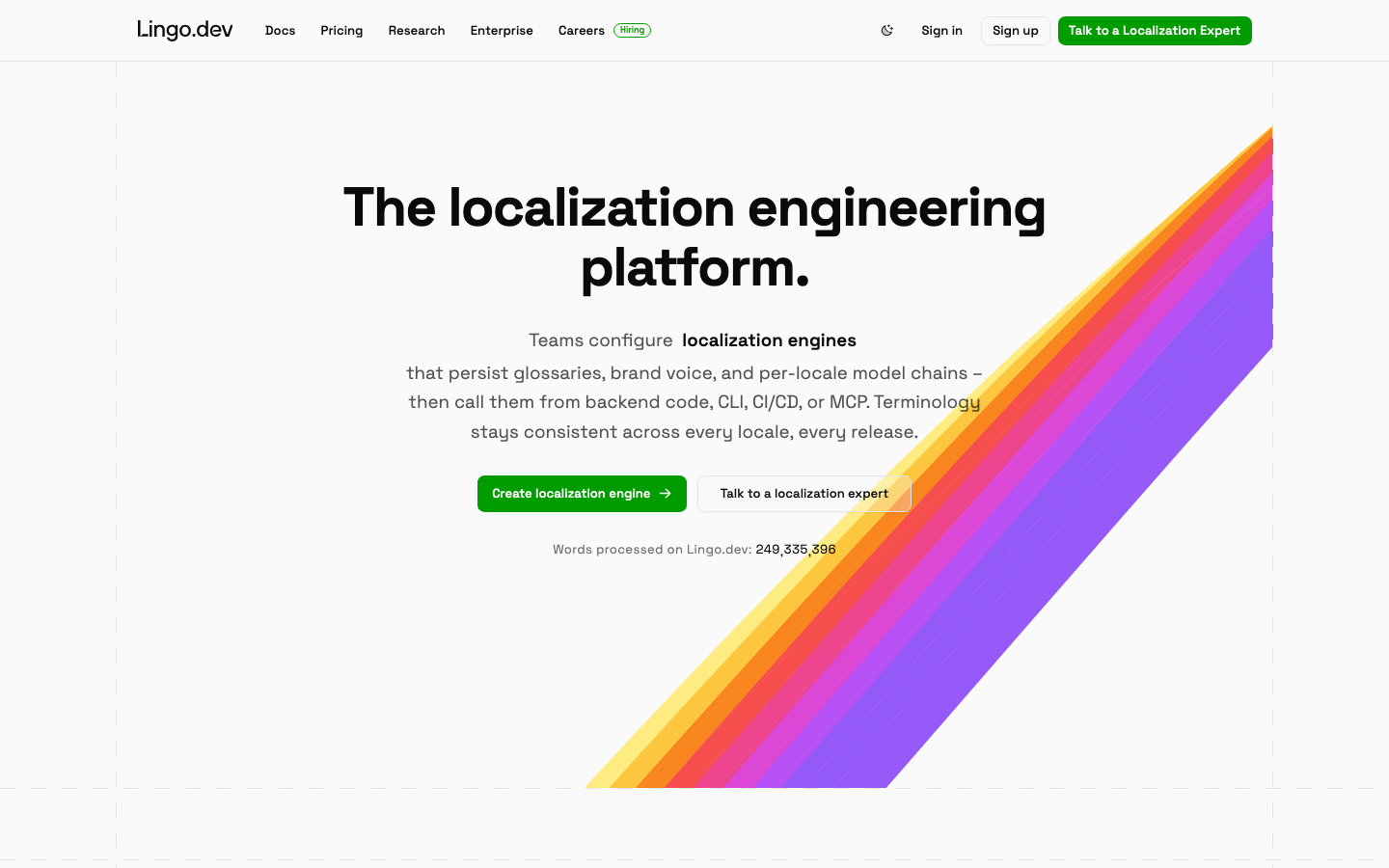
Lingo.dev is a localization engineering platform that empowers teams to configure sophisticated localization engines. These engines persist crucial elements like glossaries, brand voice guidelines, and per-locale model chains. Teams can then seamlessly integrate these engines into their workflows via code, CLI, CI/CD pipelines, or MCP. This approach ensures terminology consistency across all locales and releases, transforming localization from an external process into configurable infrastructure. Lingo.dev helps lock in terminology and score quality across various dimensions over time.

Lingo screenshot
Try Lingo

Website: lingo.dev

What is Lingo?

Lingo.dev is a localization engineering platform that empowers teams to configure sophisticated localization engines. These engines persist crucial elements like glossaries, brand voice guidelines, and per-locale model chains. Teams can then seamlessly integrate these engines into their workflows via code, CLI, CI/CD pipelines, or MCP. This approach ensures terminology consistency across all locales and releases, transforming localization from an external process into configurable infrastructure. Lingo.dev helps lock in terminology and score quality across various dimensions over time.

At a Glance

Pricing
Not specified
Status
Approved
Platform
Web
Category
AI Productivity, AI Business, Documentation Tools
Tags
brand-voice, ci-cd, engineering, glossary, localization, model-chains, translation

Why Choose Lingo

Configurable Localization Engines

Build and configure stateful translation APIs that persist domain context, ensuring consistent terminology and brand voice across all locales and releases. Lingo.dev is a localization engineering platform that empowers teams to configure sophisticated localization engines. These engines persist crucial elements like glossaries, brand voice guidelines, and per-locale.

Persistent Glossaries

Enforce product terminology by maintaining a glossary within your localization engine, preventing drift and ensuring accuracy in every translation. Lingo.dev is a localization engineering platform that empowers teams to configure sophisticated localization engines. These engines persist crucial elements like glossaries, brand voice guidelines, and per-locale.

Brand Voice Control

Define and maintain the appropriate register and tone for each locale by configuring your brand voice within the localization engine. Lingo.dev is a localization engineering platform that empowers teams to configure sophisticated localization engines. These engines persist crucial elements like glossaries, brand voice guidelines, and per-locale.

Flexible Model Chains

Select and rank translation providers with fallback options through customizable model chains, optimizing translation quality and efficiency. Lingo.dev is a localization engineering platform that empowers teams to configure sophisticated localization engines. These engines persist crucial elements like glossaries, brand voice guidelines, and per-locale.

Code and CI/CD Integration

Call your localization engine directly from backend code, CLI, CI/CD pipelines, or MCP for seamless integration into development workflows. Lingo.dev is a localization engineering platform that empowers teams to configure sophisticated localization engines. These engines persist crucial elements like glossaries, brand voice guidelines, and per-locale.

How to Use Lingo

  1. 1

    Create a Localization Engine

    Initiate the process by creating a new localization engine within the Lingo.dev platform.

  2. 2

    Configure Engine Settings

    Persist your glossary, define your brand voice, and set up per-locale model chains to tailor the engine to your specific needs.

  3. 3

    Integrate with Workflows

    Call the configured Lingo.dev localization engine from your backend code, CLI, CI/CD, or MCP.

  4. 4

    Manage Localization

    Ensure terminology consistency and track localization quality across all locales and releases using the persistent context.

Best For

  • Maintaining Brand Consistency

    Who: Marketing Teams · Ensures that brand voice and terminology remain consistent across all translated content, regardless of the locale.

  • Streamlining Development Workflows

    Who: Development Teams · Integrates localization directly into the development process via code and CI/CD, reducing coordination overhead and speeding up releases.

  • Improving Translation Accuracy

    Who: Localization Managers · Leverages persistent glossaries and context to minimize translation errors and ensure domain-specific accuracy.

  • Automating Localization Processes

    Who: Engineering Leads · Automates the application of localization rules and context, reducing manual effort and the risk of human error.

  • Tracking Localization Quality

    Who: Product Managers · Provides measurable quality scores for localization across different dimensions, allowing for continuous improvement.

Frequently Asked Questions About Lingo

What is a localization engine on Lingo.dev?

A localization engine on Lingo.dev is a stateful translation API that persists domain context, including your glossary, brand voice, and model chains, to ensure consistent and accurate translations across all locales.

How does Lingo.dev ensure terminology consistency?

Lingo.dev ensures terminology consistency by allowing you to persist your product glossary within the localization engine. This glossary is then enforced with every translation request, preventing terminology drift.

Can I integrate Lingo.dev with my existing CI/CD pipeline?

Yes, Lingo.dev is designed for seamless integration. You can call the localization engine directly from your CI/CD pipelines, as well as from backend code, CLI, or MCP.

How does Lingo.dev handle different brand voices per locale?

You can configure your brand voice within the localization engine on Lingo.dev. This allows you to define and maintain the appropriate register and tone for each specific locale.

What are model chains in the context of Lingo.dev?

Model chains on Lingo.dev refer to the ranked selection of translation providers, including fallback options. This feature allows you to optimize the translation process based on quality and cost.

How does Lingo.dev differ from traditional translation services?

Lingo.dev shifts localization from an external vendor relationship to configurable infrastructure. It embeds domain context directly into the product, ensuring consistency and allowing for measurable quality tracking, unlike traditional methods.

Can Lingo.dev help re-localize only changed content?

Yes, Lingo.dev's approach allows for efficient localization by retrieving what hasn't changed and focusing on re-localizing only the modified content, optimizing the process.